Choosing an education is rarely easy. It affects not only the educational path but also the career, professional skills, and employment opportunities. One diploma can open many doors. The other is, on the contrary, to limit further prospects. Therefore, the educational trajectory requires an informed choice.
Today, education can no longer be considered only as a set of theoretical knowledge. Employers increasingly expect practical skills, the ability to analyse complex tasks, and the ability to work in a team. The theoretical basis remains important. But without practical application of knowledge, it loses a significant part of its value.
The Labour Market is Changing Faster Than Educational Programmes.

The economy is constantly being transformed. New technologies are emerging rapidly. Many professions that were in demand ten years ago are gradually disappearing. At the same time, completely new directions are emerging.
Forecasts show major changes. By 2025, about 85 million jobs may disappear due to automation. However, this process is accompanied by the growth of new professions. More than 97 million jobs will be created in the technology and innovation sectors.
That means one thing. The workers of the future will need new skills.
The following areas are particularly actively growing:
- Artificial intelligence
- Cyber security
- Data science
- Digital technologies
- International business
In these fields, specialists who are able to apply knowledge in practice are valued. Just studying theory is no longer enough. Employers need people who are able to analyse data, solve real-world problems, and adapt quickly.
This is one reason why many students are increasingly considering BTEC courses as part of their education path. These programmes emphasise practical learning and industry-related experience alongside academic study.
Transferable Skills Are Becoming Critically Important
A modern specialist rarely works in one industry all their life. The transition between industries is becoming the norm. Therefore, transferable skills are becoming very important.
These include:
- Communication skills
- Leadership skills
- Digital literacy
- Teamwork skills
- Problem-solving skills
- Critical thinking
Such skills allow specialists to adapt to new conditions. They also enhance career mobility, which is especially important in the global economy.
In addition, many companies consider the ability to work in an international environment as a prerequisite. Globalisation has changed the labour market. Geographical boundaries no longer limit career opportunities.
Academic Education: The Foundation of Knowledge

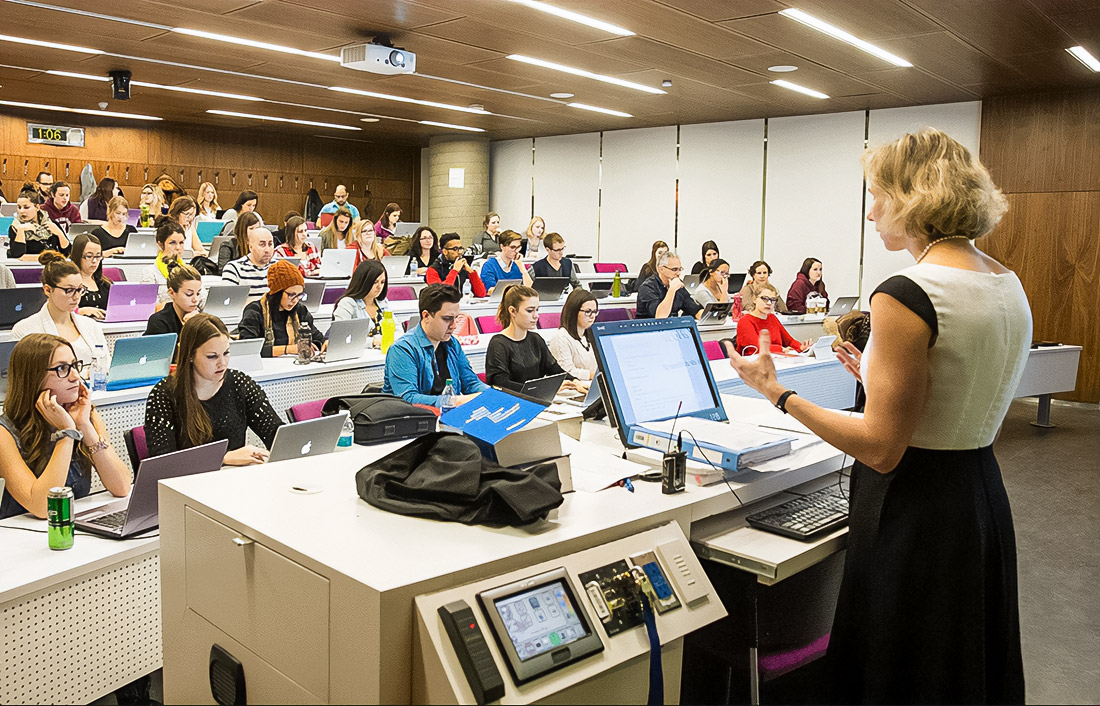
Traditional university programmes remain an important part of the educational system. They form an academic foundation and develop a deep understanding of the disciplines. The training structure usually looks like this. Students study several subjects at the same time. Each semester lasts approximately 12-15 weeks. At the end of the course, a final assessment of knowledge is conducted.
In many universities, 60-70% of final grades are generated by final exams. Such a system tests students’ ability to assimilate theoretical material and analyse complex concepts.
The academic model is particularly suitable for areas related to scientific research. It forms fundamental knowledge. This is an important base for further education and a scientific career.
However, this model has limitations. Theory is not always accompanied by practical tasks. Therefore, graduates sometimes face difficulties in entering the labour market.
Professional Education: Learning Through Practice
Professional programmes are based on a different principle. The main focus is on practical learning and project-based learning.
Instead of exams, various forms of assessment are used:
- Assignments
- Coursework
- Portfolios
- Case studies
- Presentations
- Group projects
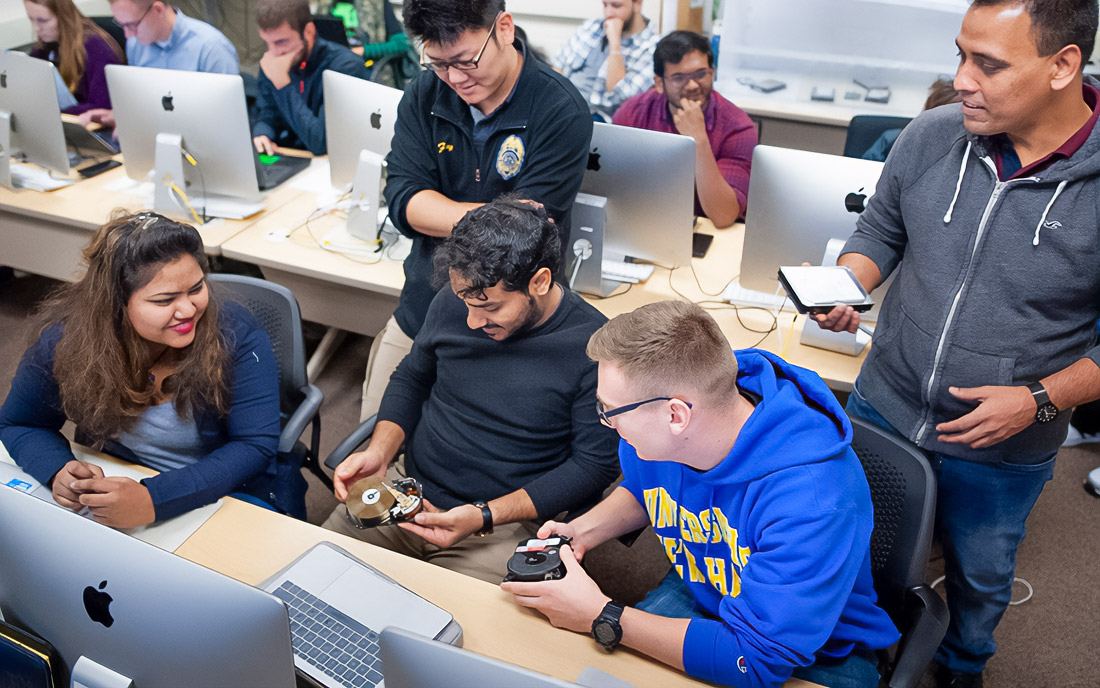
Such a system requires constant work. Students regularly carry out projects, analyse real-world situations, and propose solutions. This forms a real-world application of knowledge.
Assignments often have a significant volume. For example, academic projects can contain 2500-4000 words. They require research, data analysis, and reasoned conclusions.
This approach develops independence. Students learn how to plan work, manage time, and complete tasks with constant deadlines.
Practical Projects and Professional Skills Development
Professional programmes often mimic real-world work processes. Students perform tasks similar to those faced by specialists in companies.
Among the typical projects:
- Business planning
- Market analysis
- Financial management
- Marketing strategy
- Software development
- Network security
- Coding fundamentals
Such tasks help to form workplace skills. Graduates gain experience in solving tasks close to their professional activities.
Industry partnerships and internships become an additional advantage. They allow students to get to know the work environment during their studies.
Programmes connected to BTEC business Pearson pathways, for example, often include project work that mirrors real business challenges such as strategic planning, marketing analysis, and financial evaluation.
The System of Qualification Levels
Modern educational programmes have the structure of qualification levels. Each level reflects a certain stage of academic development.
The approximate structure looks like this:
- Level 2 – basic professional training
- Level 3 – High school level
- Level 4 and Level 5 – the first two years of the Bachelor’s degree
- Level 6 – completion of the Bachelor’s degree program
- Level 7 – postgraduate education
Such a system facilitates academic progression. Students can gradually increase their level of education and move on to more complex programmes.
In addition, it allows you to combine different educational approaches. For example, you can start with professional training and then continue your education at the university.
Practical Skills and Requirements of Employers
Employers are increasingly paying attention to the real skills of candidates. The diploma remains important. But it is no longer the only criterion.
Companies are looking for specialists who can:
- Analyze complex problems
- Work in a team
- Make decisions
- Project management
Therefore, industry-relevant education is becoming more and more in demand.
Knowledge in the fields of:
- Machine learning
- Automation strategies
- Digital systems
- Software engineering
Such skills allow graduates to adapt to the workplace faster.
Education and the Global Economy
Many countries are actively investing in the development of vocational education. This is due to the growth of the knowledge economy and technology industries.
Companies need specialists who are able to quickly master new tools and technologies. Therefore, educational programmes are gradually becoming more flexible.
They include:
- Practical projects
- Team research
- Real business cases
It helps students to develop lifelong learning. The ability to constantly learn is becoming one of the key skills of a modern specialist.
How to Choose an Educational Trajectory
The choice of an educational programme should be informed. It depends on several factors.
First, you need to consider career goals. Some professions require fundamental academic training. Others require practical skills.
Secondly, it is important to understand your own learning style. Some students prefer lectures and exams. Others acquire knowledge better through practice.
Thirdly, it is worth analysing job market trends. Many industries will be actively developing in the coming years. By 2030, a significant portion of industries will require new skill sets that are just beginning to take shape.
Therefore, an educational programme should not only provide knowledge but also develop the ability to adapt.
The modern education system is changing. The theory remains important. But the practical application of knowledge is becoming more and more important. The combination of academic foundation, practical learning and transferable skills creates the most sustainable educational model. It helps students adapt to changes in the labour market.
The future belongs to specialists who know how to learn, analyse, and apply knowledge in practice. It is these skills that determine professional success in the modern world.

Hockey fan, risk-taker, drummer, hand letterer and RGD member. Working at the intersection of modernism and intellectual purity to create strong, lasting and remarkable design. I work with Fortune 500 companies and startups.